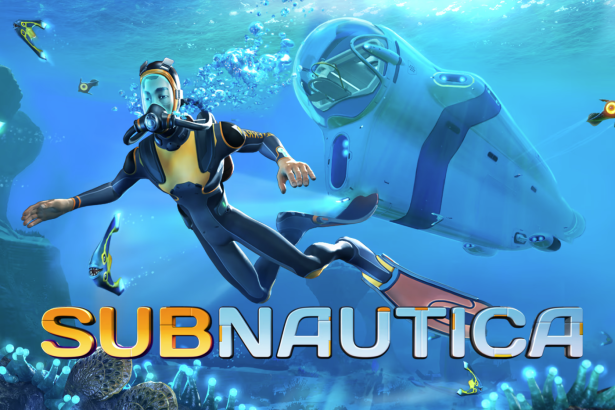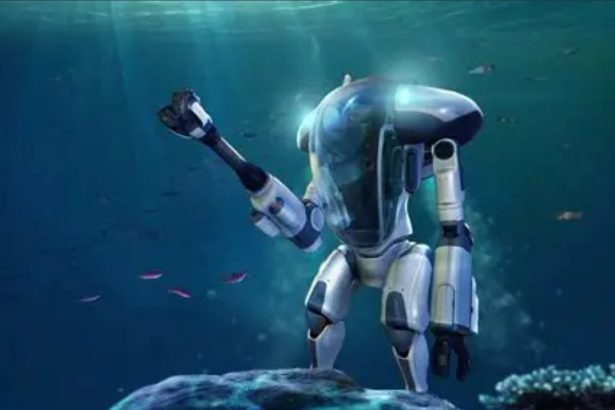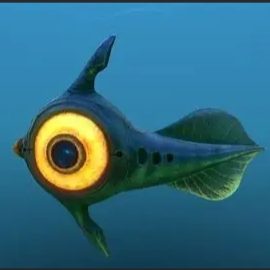
Subnautica features a wide range of Biomes to explore and exploit. They all represent miniature ecosystems from the real world.
There is a huge variety of Biomes, from the vibrant Kelp Forest to the sizzling depths of the enigmatic Lava Lakes. Each Biome contains its own set of Flora and Fauna to discover and resources to harvest.
Safe Shallows
Description
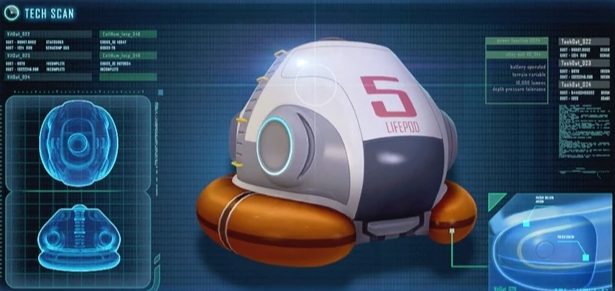
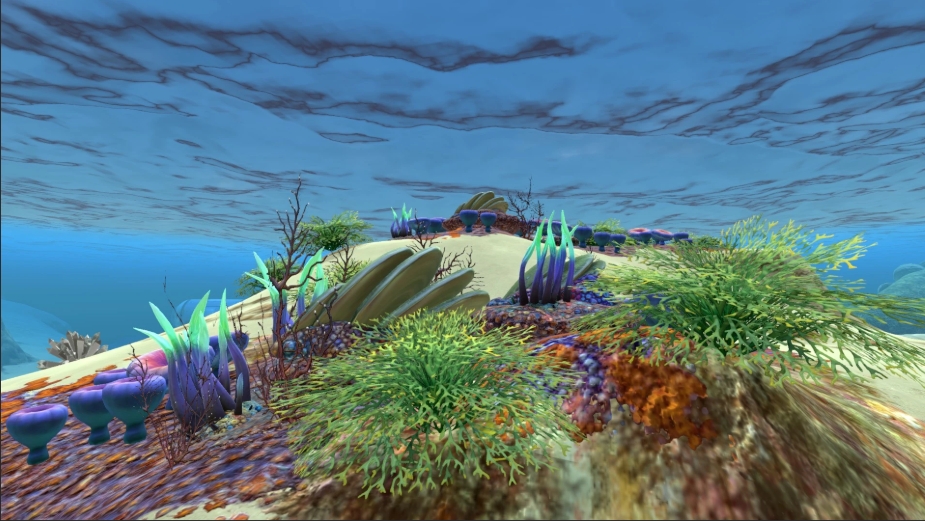
The Safe Shallows is the first biome encountered by the player, as it is where Lifepod 5 crashed. This is also the starting point of the game, mainly located near the center of the map. The biome has multiple sections that are not directly connected to each other, but all these fragments of the biome have the same general look.
About Biome
The Safe Shallows contains coral reefs sprawling over a large part of the area, with small cave systems that can be found beneath the surface. As the name implies, this biome is one of the safest in the game, as it is a relatively shallow area, there are few environmental hazards, and no predators call this biome home. However, caution should still be used for the occasional Gasopods passing through, and the caves are home to hostile Crashfish. Some predators are also known to wander here from adjacent biomes, mainly Stalkers from the Kelp Forests, and Sand Sharks from the Grassy Plateaus.
The Safe Shallows offers plentiful diving experiences for all players, especially newcomers, as it is home to a variety of life forms; coral, fauna (mostly edible), and flora alike, with a great abundance of harvestable materials. It is one of the most colorful biomes in the game.
Although rare, it is possible for Mesmers from the Kelp Forest Caves and Reefback Leviathans from the Grassy Plateaus to roam into this biome, taking new players by surprise.
Kelp Forests
Description
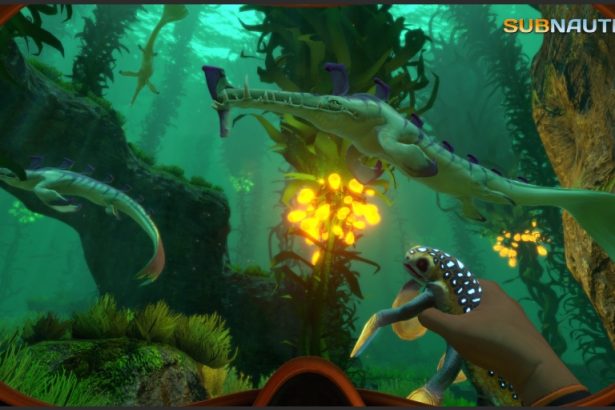
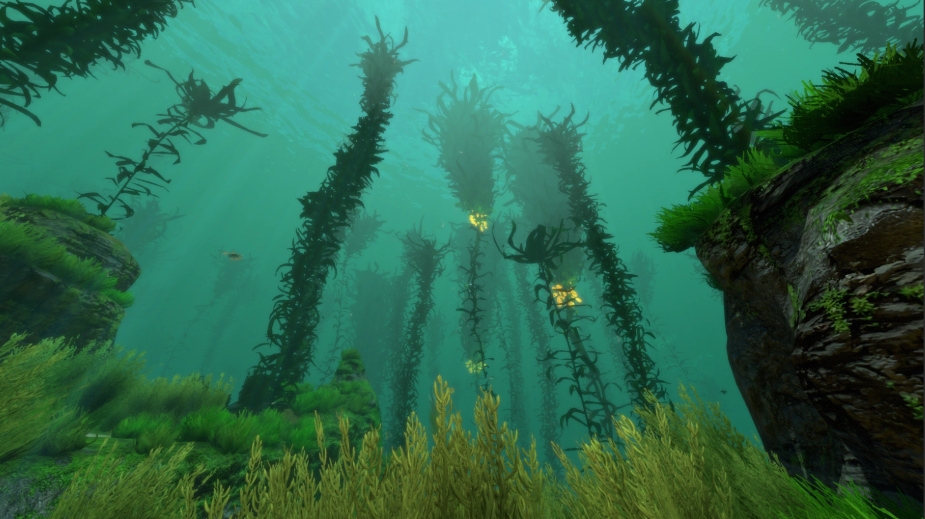
Kelp Forests are one of the most diverse biomes due to the range of fauna and flora that make their home in these biomes. These biomes are characterized by the abundance of Creepvines, and possess a distinct greenish hue in the water.
About Biome
The Kelp Forests are one of the most productive and dynamic ecosystems on Planet 4546B. They are also the primary homes of Stalkers and Hoverfish.
They are located at medium-shallow depths, and are home to mostly passive life forms, with the only exceptions being Stalkers and Drooping Stingers. The seabeds are mostly mossy and sandy, with the terrain being comprised of grassy knolls and arches, which sometimes show entrances to small cave systems. There are also many canyons to be found in these forests. There are a lot of decorative flora on the sandy, grassy bottoms.
Materials
Most of the raw materials found here are at medium-level depths, with many harvesting nodes such as Limestone and Sandstone. The Creepvine Seed Clusters, found on some Creepvines provide light and beautiful night time scenery, and are also crucial ingredients for making Lubricant and Silicone Rubber.
There are currently five Kelp Forests on the map, some containing wrecks, a destroyed lifepod, or both.
Large amounts of metal salvage can be found here due to the Stalkers’ gathering behavior.
Grassy Plateaus
Description
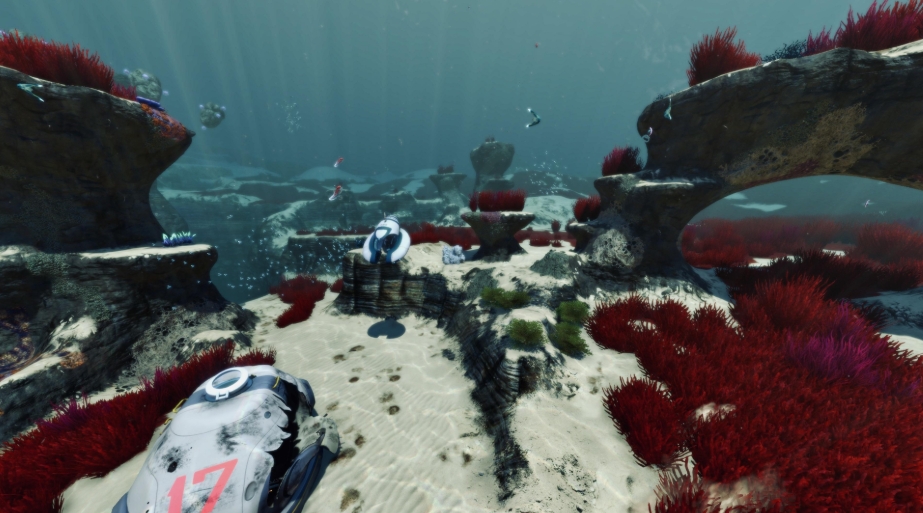
The Grassy Plateaus cover vast areas where the seafloor is too deep for Creepvines to take hold. As stated by the PDA, a wide variety of lifeforms populate them. They are generally one of the first biomes the player encounters in Subnautica. The 4 Grassy Plateau areas borders the Kelp Forest, Mushroom Forest, Safe Shallows, Sparse Reef, Blood Kelp Trench, Crag Field, Crash Zone, Underwater Islands, and the infamous Dunes.
About Biome
Grassy Plateaus are characterized by large, pillar-like structures seemingly created from water current erosion, smooth marine plains, and sandy terrain almost completely carpeted with Blood Grass, giving the Grassy Plateaus their distinctive name. While exploring the Grassy Plateaus, it is advised for new players to look around their surroundings more carefully for groups of Biters, and to stay far away from suspicious sand clouds, as Sand Sharks dwell abundantly in this biome. Tiger Plants, another type of hazard, can also be found here.
Besides the large abundance of resources such as Quartz, Limestone and Sandstone outcrops, this biome also features several small caverns, as well as entrances to the Jellyshroom Cave. On top of that, this biome contains plenty of wrecks that include useful fragments such as the Modification Station and the Battery Charger. Overall, a great biome to explore early game.
There are currently four Grassy Plateaus areas on the map, as well as several Destroyed Lifepods within the areas.
Mushroom Forests
Description
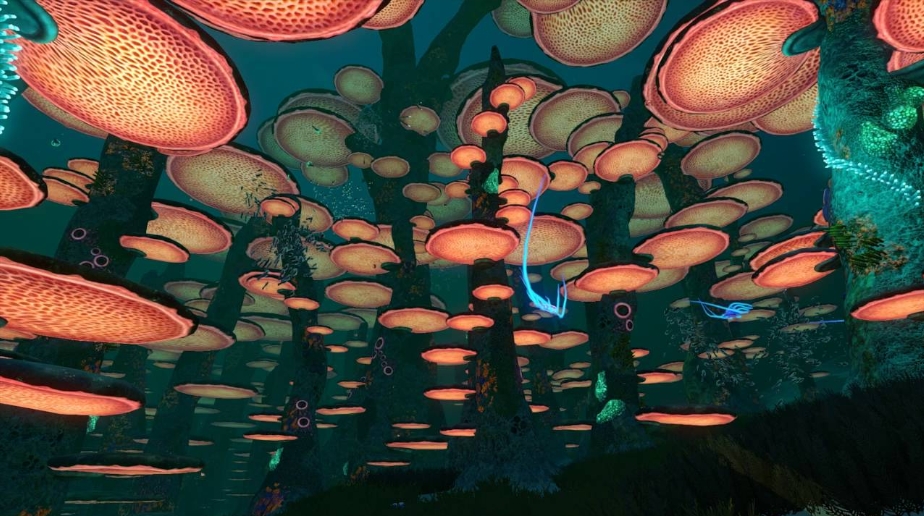
The Mushroom Forests are biomes characterized by towering coral known as Tree Mushrooms, as well as many other types of life forms, especially flora.
About Biome
The Northeastern Mushroom Forest is the smaller of the two Mushroom Forests. It is found next to the front of the Aurora.
It is densely packed with Tree Mushrooms and features occasional cliffs that lead down to the Bulb Zone. Most of the Fauna of the Bulb Zone, including its predators (Mesmers, Ampeels and Bonesharks) will often wander into the Northeastern Mushroom Forest, making it equally if not more dangerous as the Northwestern one. A Reaper Leviathan that wanders away from the Crash Zone may travel into this biome. In addition to this, there is always a Reaper Leviathan close to the border with the Mountains and a Kelp Forest, the area near a naturally formed bridge. It is strongly advised to stay away from this small section of the biome as it is highly dangerous.
Near the Crash Zone, a small clearing can be found that is home to a large amount of Boneshark Eggs. The numbers can vary, from 2-5 eggs.
An entrance to the largest Mushroom Forest Caves is located embedded into a cliff, facing the Bulb Zone, below the largest Tree Mushroom. These caves also connect to one of the Bulb Zone Caves.
This forest is packed with resources, especially Lithium and Shale Outcrops.
The Northwestern Mushroom Forest is the larger of the two Mushroom Forests.
This forest borders the Dunes, Northern Blood Kelp Zone, Underwater Islands, Grassy Plateaus and one of the Kelp Forests. It is dominated by a single Giant Tree Mushroom, where most of the valuable resources can be found in abundance. The player is advised to stay cautious while exploring this area, as Bonesharks tend to lurk in the denser parts of the biome as well as several Reaper Leviathans found along the Dunes border of the Northwestern Mushroom Forest. Bonesharks and even some Ampeels can come from the Underwater Islands and the Northern Blood Kelp Zone respectively.
Wreck 9 can also be found in the Northwestern Mushroom Forest. Two Purple Pinecones can be found southeast from the wreck, close to other local Flora and Coral, near the border with the Grassy Plateaus.
Jellyshroom Caves
Description
The Jellyshroom Cave is a cave system found below the Grassy Plateaus, Kelp Forest, and Safe Shallows.
Four entrances can be found at coordinates: (130 -95 -390), (-360 -110 -225), (-495 -90 15), and (-725 -105 0).
The area is explorable via the Seamoth, but it is dangerous to do so without a Seamoth Depth Module MK1 or higher due to the biome‘s depth. The Seamoth Perimeter Defense System upgrade is also advisable, but not needed, due to the Crabsnakes’ tendency to ambush the player from the Jellyshrooms themselves.
Exploring the caves with the Prawn Suit is possible but challenging without the Grappling Arm and/or Jump Jet Upgrade to get back out of the caves.
About Biome
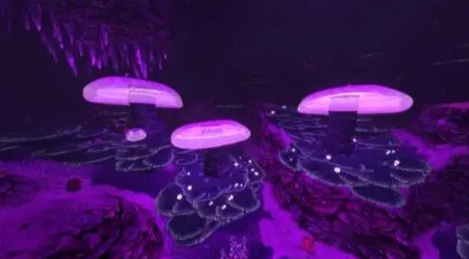
The Jellyshroom Cave is a large cavern characterized by a dense population of huge, translucent, purple Jellyshrooms, along with structures such as stalactites and stalagmites.
The cave system has two predatory species and two prey species. The most notable of these are the Crabsnakes residing in the Jellyshrooms, and the Oculus, both of which are found only in this biome.
Shale Outcrops and Magnetite can be found here, as well as various Large Resource Deposits.
Sparse Reef
Description
The Sparse Reef is a biome located southwest of Lifepod 5, bordering one of the Grassy Plateaus, the Blood Kelp Trench, the Sea Treader’s Path, the Grand Reef and Kelp Forests. As its name implies, this gloomy area is sparsely populated, home to a few types of small fauna and flora.
It also houses its own cave system, the Deep Sparse Reef, which can be found near the wreck in this biome.
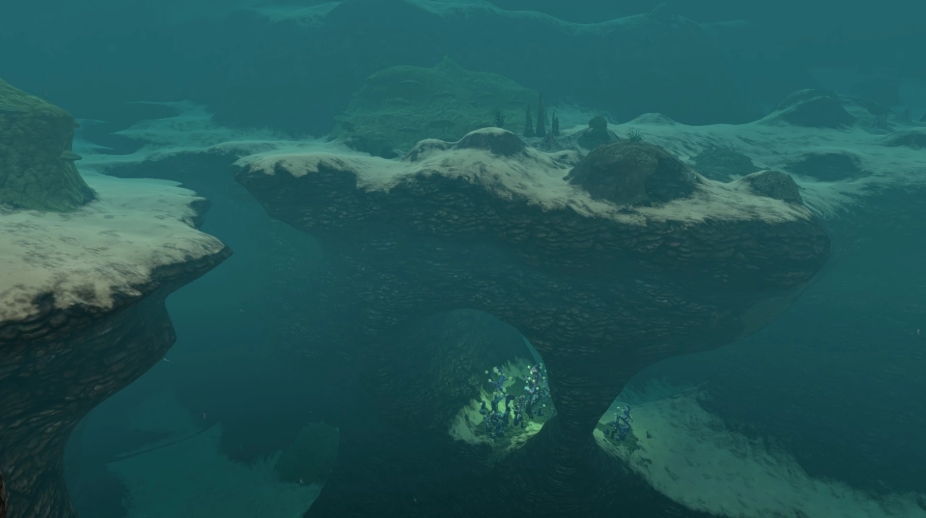
The Sparse Reef is a large, sprawling region composed of relatively flat areas covered by green mounds scattered with Table Coral as well as large fissures where most of the Bioluminescent flora inhabit, notably the Eye Stalks. Some areas have deep drop-offs, along with basins, caves, and other irregular formations. A green-blue fog can be seen shrouded over the distinctively unsaturated landscape, creating a gloomy, desolate atmosphere.
There are also large clusters of spire-like structures found along the border of the Sparse Reef next to the Grassy Plateaus, and near the Grand Reef. Found within these spires is a small entrance to the Grand Reef Caves, towards the Southeast. Continuing southwest, a steep, dark drop into the Sea Treader’s Path can be seen.
The main hazard in the Sparse Reef are the small clusters of Tiger Plants found in the deeper portions of the biome that can cause heavy damage to unaware players.
In the deeper areas of the Sparse Reef (exceeding 200 meters) a distinctive, echoing ambience can be heard, contributing to the atmosphere. This feature can also be heard in other deep, open biomes such as the Dunes, or the Sea Treader’s Path.
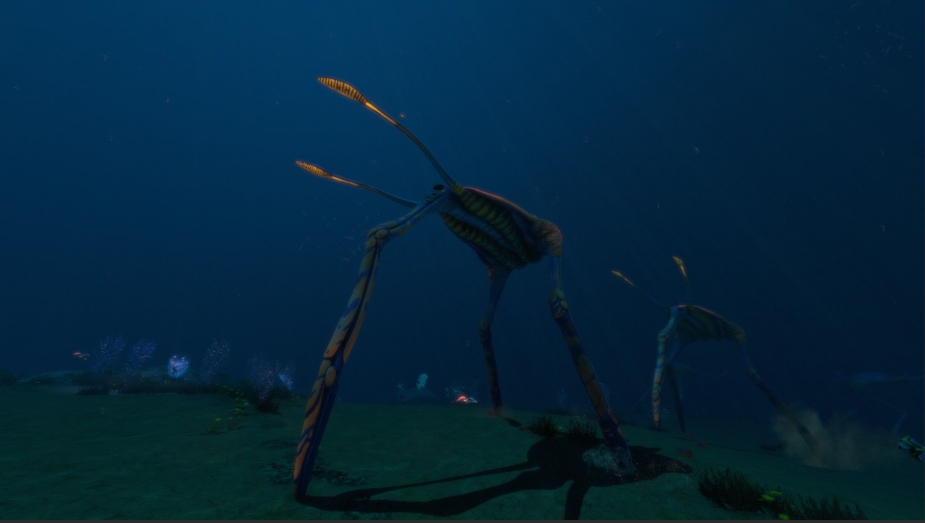
Sea Treader’s Path
Description
The Sea Treader’s Path is an extended biome intersecting the Grand Reef, Sparse Reef, Dunes and the Blood Kelp Trench. It is located to the southwest of Lifepod 5.
It is the migration path of the Sea Treader Leviathan.
The Sea Treader’s Path biome is largely made up of a massive hill with an expansive tunnel running through it. The top of the mound is considerably sandy and sparse in life, though clusters of an unknown coral species can be found along its ridges. The tunnel below is the main route through which the Sea Treader Leviathans pass through the biome and is filled with a much larger array of life, such as Membrain Trees and Deep Shrooms.
Many narrower branches of the tunnel can be found within it, containing many deposits of Ruby and Lithium.
Sea Treader Leviathans roam this area on one of their largest migration routes, passing through the biome on their way to and from the Dunes and Grand Reef.
Wreck 7 can be found on the Sea Treader’s Path at a distinct, flat region following the Sparse Reef.
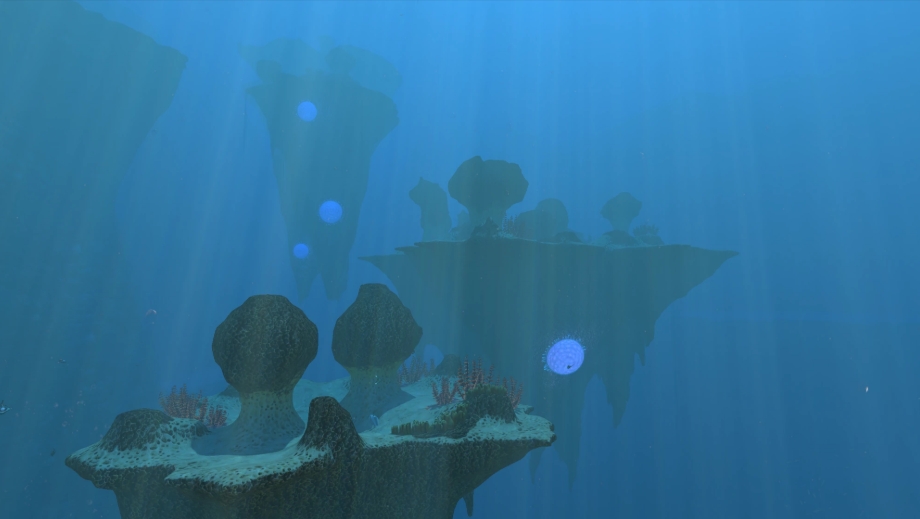
Underwater Islands
Description
The Underwater Islands are a unique biome in Subnautica, featuring multiple and massive rock formations suspended above the ocean floor. Bonesharks dwell abundantly here, along with other types of fauna and flora. It also features its own cave system, the Underwater Islands Caves.
Most of the Underwater Islands rely completely on the buoyancy provided by Ancient Floaters. Currently, there are eighteen islands in the area, with the size of the many “islands” varying from minuscule to massive. Two of the largest islands have a great variety of life forms and even possess their own separate cave system. A large ring of broken-off rocks surrounds the largest island, it is unknown how these rocks float without any attached floaters.
Hydrothermal vents can be found on the surface of the largest island, while Lava Geysers can be found in huge numbers on the ocean floor directly underneath the islands. Occasionally, large chunks of rock can be seen falling down from the islands and disintegrating. In some places, small streams of sand can be seen flowing down from over the edges of the islands.
Quartz is a common find on both the tops and walls of the islands, with Diamonds occasionally as well. Sandstone Outcrops and Shale Outcrops are located on the ground of most of the islands. Large Resource Deposits of Uraninite and Silver are located at the bottom with the Lava Geysers. Large Gold Deposits are rarely found near the cliffs around the biome, alongside Limestone Outcrops and Spadefish.
The Underwater Islands border one of the Mushroom Forests, Mountains, one of the Kelp Forests, the Northern Blood Kelp Zone, and one of the Grassy Plateaus. Wreck 4 is located in the Underwater Islands, suspended by two of the islands.
The abundance of Boneshark pose an active threat to Seamoths and Prawn Suits. Consequently, maintaining vehicle wellbeing is important in the Underwater Islands.
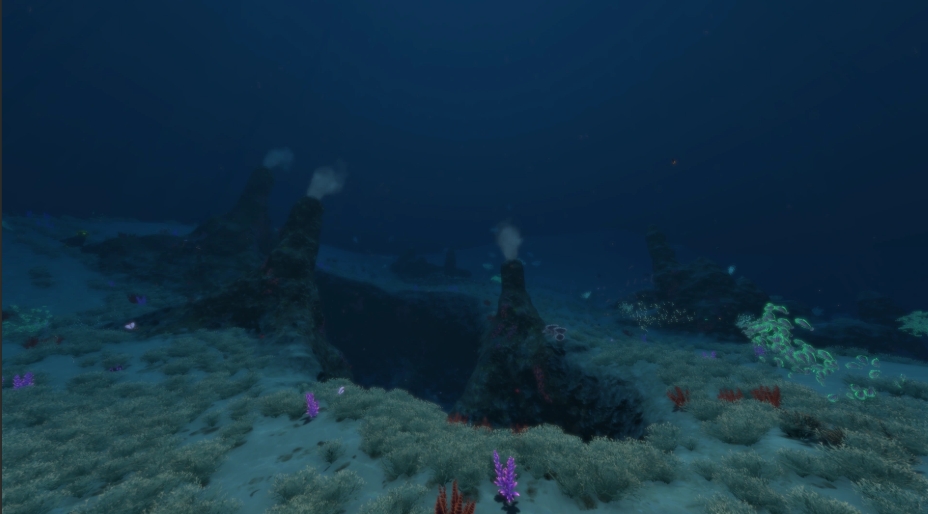
Dunes
Description
The Dunes is a biome located west from Lifepod 5, on the edge of the map, bordering one of the Grassy Plateaus, Sea Treader’s Path, one of the Safe Shallows, both of the Blood Kelp Zones, the Northwestern Mushroom Forest and the Crater Edge.
There are three Wrecks within the Dunes. One can be found near the Northwestern Mushroom Forest, having seemingly slid down the sandy dunes from the forest. Another two, smaller wrecks are also found in the Dunes near the Sea Treader’s Path border.
A large sinkhole can be found approximately 220m south from Wreck 6 (The one closest to the Northwestern Mushroom Forest.) The Dunes Caves are found within along with a Cuddlefish egg, located right in the center of the sinkhole.
This biome also harbours a large crater from a meteor impact, which can be found close to the border with the Northern Blood Kelp Zone.
About Biome
The Dunes feature open waters and vast, sandy plains and dunes, sparsely littered with various types of rock structures. It is also home to many dangerous types of Fauna, the most notable one being the eight Reaper Leviathans that patrol the open spaces of the biome. These leviathans and the PDA summary of the biome heavily discourage players from entering the biome.
It is relatively shallow at its borders with other biomes, but slopes down, albeit mildly, to very deep sections. Gasopods can be found, alongside their eggs, near the several hydrothermal vents in this biome. Most of the Flora and Coral is also located near these, alongside Lithium and Rubies. Reaper Leviathans often wander close to the hydrothermal vents so tread carefully.
Four Sea Crowns are located within the sinkhole of this biome. It is recommended to approach the sinkhole with caution, as there is a Reaper Leviathan that is always close to it.
Even in the daytime, the Dunes are quite dark and murky, making it difficult to see threats. It is recommended to keep track of where the Reaper Leviathans reside and give those areas a wide berth.
If building a base in the Dunes, a Scanner Room is incredibly useful. Not only can it be used to scan for resources, but it can also be used to keep track of the Reaper Leviathans in the vicinity. This is especially effective with a Scanner Room HUD Chip.
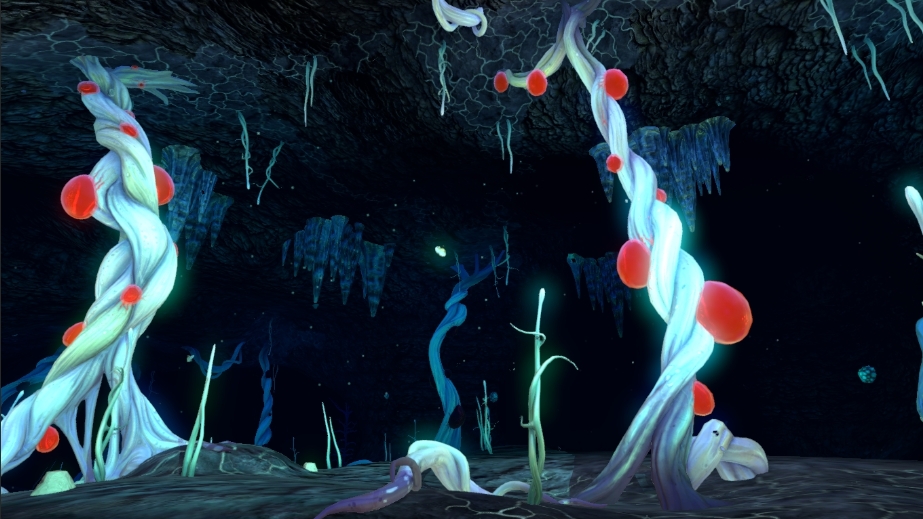
Blood Kelp Forest
Description
The Blood Kelp Zones are special biomes in Subnautica, characterized by their depth, darkness, and abundance of giant Bloodvines, some of which carry Blood Oil pustules at the base of their stems.
About Biome
The Blood Kelp Trench is located south-west from Lifepod 5, between the Dunes, the Sparse Reef, the Grassy Plateaus and the Sea Treader’s Path.
The Trench lacks the Crabsquids and the Ghost Leviathan of the Northern Blood Kelp Zone, but still has predators in the form of Blighters, Ampeels, and Warpers. The more confined spaces may make it more difficult to avoid them if one is not careful.
It consists of a single deep trench with natural rock bridges spanning from one wall to another, and a small cavern system located below the Bloodvines where their roots can be found. One of the Wrecks can be found in this area, stuck between the trench’s walls. This zone is considered unsuitable to explore with the Cyclops due to the trench’s narrow width, and an ill-equipped Prawn Suit may get stuck due to this biome’s sheer depth.
Gel Sacks can only be found in the deepest area of this biome, below 500 meters, in the section below the wreck. Ampeel Eggs can be found at the very bottom of the trench.
Grand Reef
Description
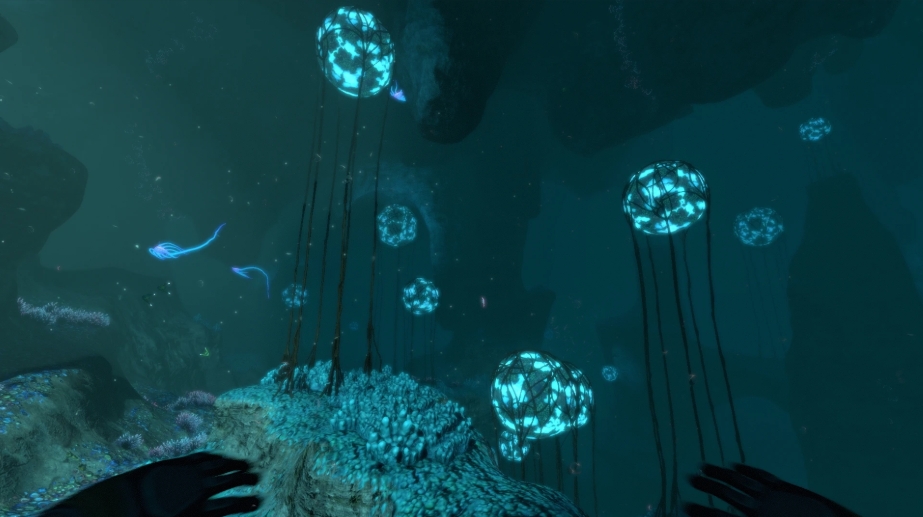
The Grand Reef is home to a limited amount of fauna, including the large bottom-dwelling Sea Treader Leviathans, as well as two massive Ghost Leviathans. It is also known for its unique types of flora, from the many luminous Anchor Pods to the peculiar Membrain Trees. There are multiple entrances to small caves known as the Grand Reef Caves in the Grand Reef. Scattered deep within the Grand Reef are multiple hydrothermal vents.
Below this area, the player can find the Deep Grand Reef, a large system of caverns featuring similar types of flora and fauna, with the addition of Crabsquids and Jellyrays and the absence of the Sea Treader Leviathans.
Rubies and Gel Sacks are commonly found in the Grand Reef, along with many other rare materials and fragments. Due to the abundance of hazardous fauna, depth, and general difficulty of navigation, exploring this biome early on without adequate gear is not recommended.
An easy way to get to this biome is to use the Floating Island as a landmark for its location.
Mountains
Description
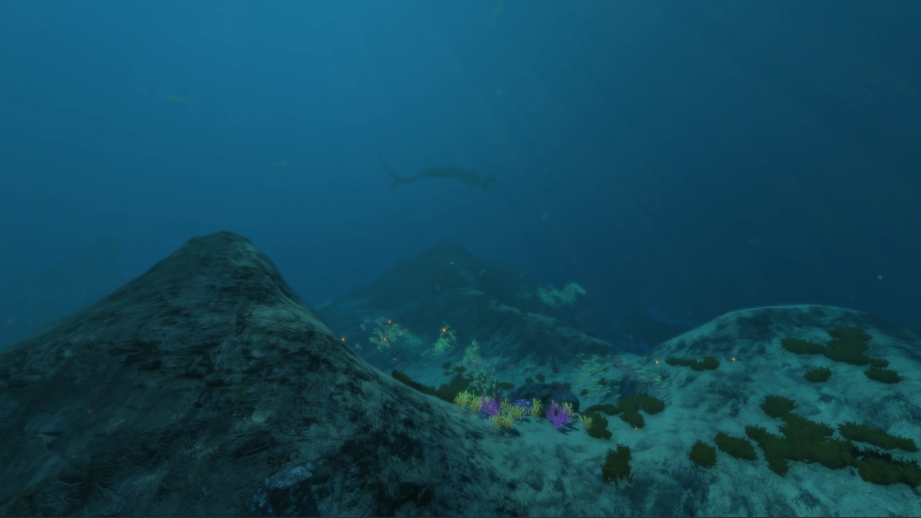
The Mountains is a vast, barren biome containing huge deep underwater mountain ranges, hydrothermal vents, rocky structures and an abundance of brown algae. It is located northeast of Lifepod 5, bordering the Bulb Zone, one of the Mushroom Forests, the Underwater Islands, one of the Kelp Forests, The Northern Blood Kelp Zone and the Crater Edge.
About Biome
The Mountains are characterized by a variety of huge rocky mountain ranges, with vast, unobstructed areas of open water surrounding them. Hydrothermal vents can often be found on the mountains, and typically contains Magnetite around them. Plenty of large, smooth boulders can be seen resting along valleys and the seabed.
Extreme caution should be taken while exploring the Mountains, as it is home to seven Reaper Leviathans. At least one can be found near the Mountain Island bordering the Mushroom Forest. In conjunction with the open waters providing no cover, these leviathans can heavily discourage players from venturing deeper into the biome, where the best fragments and areas are located.
Wreck 5 and Wreck 19 can be found here, both located in deep, dangerous locations.
The Mountain Island, located in the southwest corner of the biome, extends 110 meters into the air above the sea level, featuring many underwater Mountains Caves that can be both entered from the underwater entrance or directly on the island’s shore.
Bulb Zone
Description
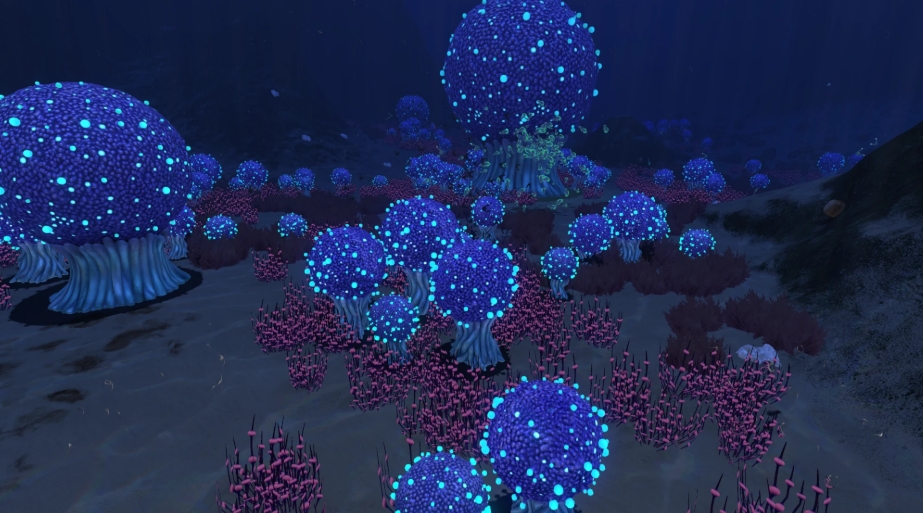
The Bulb Zone is characterized by small crevices and overhangs in a vast, sandy dune-like area. It is also abundant with small brown algae, and a large variety of plants with blueish-purple hues, the most notable of which being the various sized Bulb Bushes. A deep blue hue shrouds the biome which may make hazards difficult to spot.
The Bulb Zone is deep and home to certain dangerous fauna. Notable predators, such as Bonesharks and Ampeels, can be found scattered throughout the Bulb Zone. Occasionally, Mesmers can also be found.
Pods of Reefback Leviathans can be found above the Bulb Zone.
Due to its proximity to the Crash Zone, the southern half of the Bulb Zone is subject to Radiation. If the player has not repaired the Aurora’s drive core, a Radiation Suit is strongly advised to explore the southern region.
There is a cave system located below the Bulb Zone, known as the Bulb Zone Caves. These caves are accessible via any of the three entrances located within the biome. One of the caves links to the Mushroom Forest Caves. Rubies can occasionally be found in the caves.
Several Lava Geysers can be found in this biome. This, together with the Bulb Zone Caves, suggests a small amount of volcanic activity. According to the PDA Dialogue, there are strange electrical signatures in the Bulb Zone, which likely originate from Ampeels.
Two large Wrecks are located within the Bulb Zone, containing several fragments.
Two Sea Crowns can be found here.
A single Supply Crate is found along the Crash Zone border. The only other ones are found in the two wrecks.
Crash Zone
Description
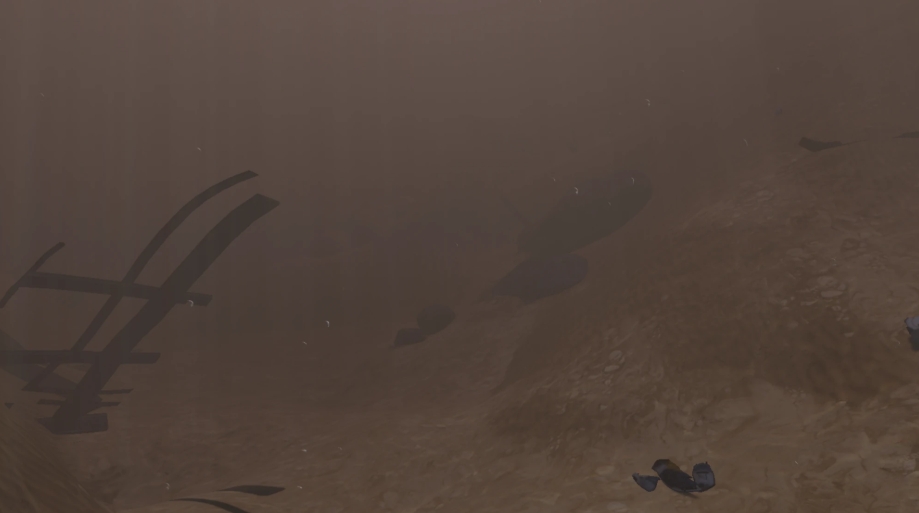
The Crash Zone is the biome in which the Aurora crashed, hence its name. It is characterized by rocky slopes, mesas at the southern parts, and deep trenches covered with sand and is littered with debris from the crashed spaceship. This biome is one of the eeriest biomes due to its open spaces, murky brown water, ominous wreckage, and the presence of nine Reaper Leviathans. The Crash Zone is currently the largest biome in Subnautica.
The Crash Zone is located on the easternmost part of the map, surrounded by a Kelp Forest, Safe Shallows, the Bulb Zone, a Mushroom Forest, the Crag Field, and a Grassy Plateaus.
There is a large amount of dry land on the eastern side of the Aurora which has plenty of debris and Metal Salvage. Also, flocks of Skyrays populate this area.
The Crash Zone possesses a distinct sandy, murky tint of water, and is nearly devoid of Flora, though the western part that borders the Safe Shallows shares some of its flora. The biome makes up for this, however, with a wide variety of fauna, most of which being predatory – including the dangerous Reaper Leviathans. The harvesting nodes typically found in the area makes this biome a good source for raw crafting materials.
A portion of the Bulb Zone goes into the Crash Zone, near Aurora’s front section. This small area contains a good amount of Limestone and Sandstone Outcrops. It is guarded by a Reaper Leviathan.
The safest way to cross the Crash Zone is to follow the Safe Shallows as close as possible, then stick to the shallowest parts of the area. If attempting to enter the Aurora, it only takes a brief trip through deeper waters, although a Reaper Leviathan can frequently be found west of the entrance. The “landing” inside is shallow enough to provide some safety for embarking and disembarking. It requires a radiation suit and ideally should be done with a Seamoth, as there is a radiation field around the perimeter.
Crater Edge
Description
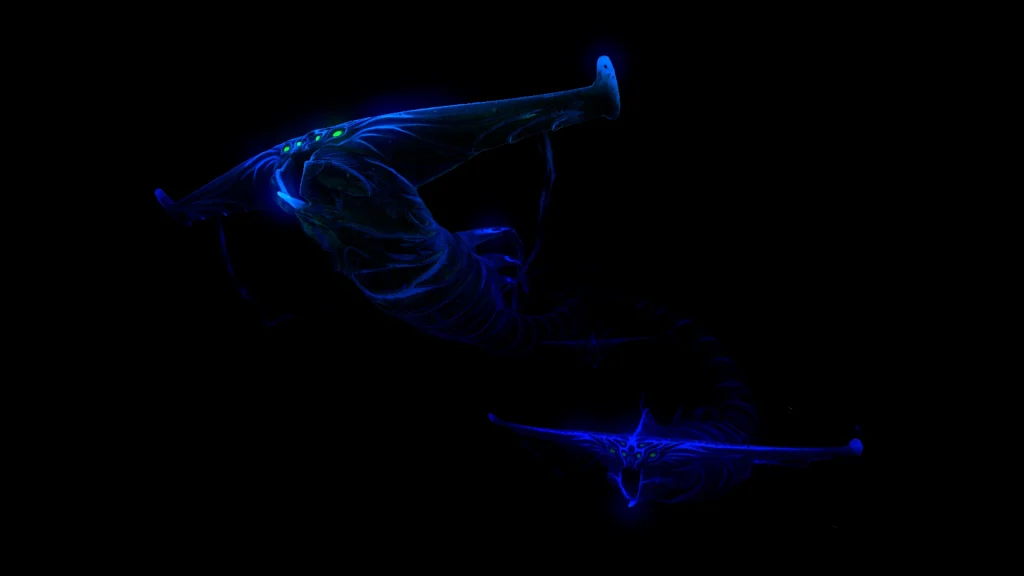
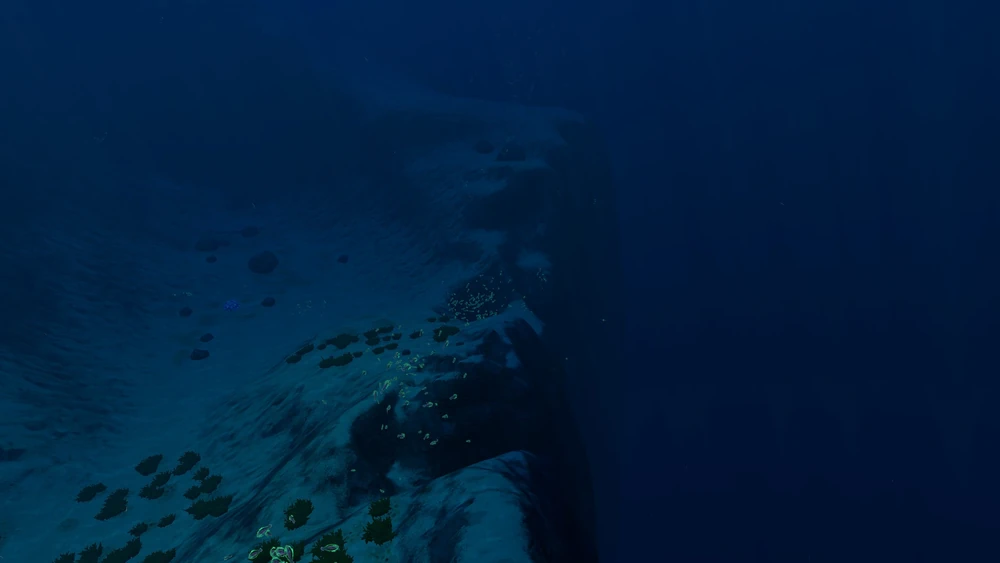
Subnautica takes place inside The Crater of an enormous, dormant, aquatic volcano, approximately two kilometers in diameter. The Crater Edge, also known as the Void, is the area surrounding this crater. With no resources and extreme danger, the zone serves as a border for the game’s map.
Adult Ghost Leviathans live in the Crater Edge, where they deter players from straying outside of the playable area. When entering the Crater Edge, a single Ghost Leviathan spawns in at first. If the player stays in the Crater Edge for 40 seconds, a second Ghost Leviathan will spawn. Staying in the area for another 40 seconds will spawn a third and final Ghost Leviathan. They will pursue the player until they return to the playable area, upon which all Ghost Leviathans retreat.
Warning: Entering ecological dead zone. Adding report to databank.
― PDA, Dialogue
Lava Lakes / Inactive Lava Zone
Description
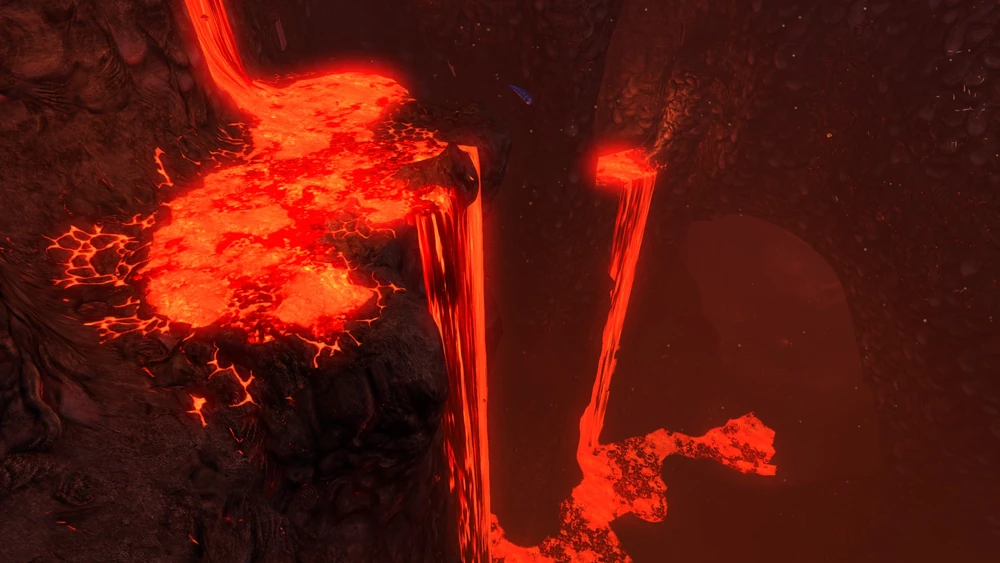
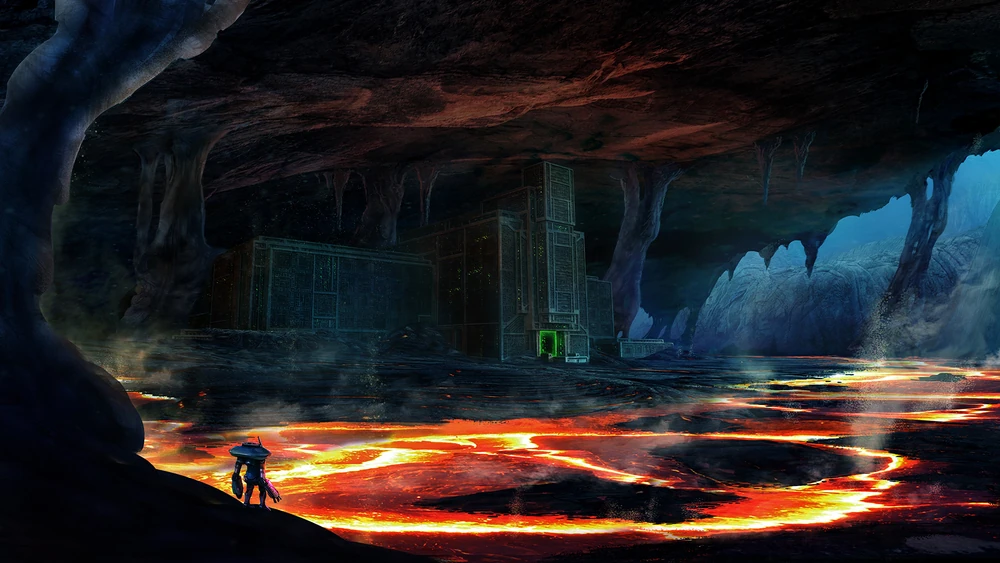
The Lava Lakes are a cavebiome in Subnautica. At 1300+ meters down they are the deepest biome on the map. It has the highest ambient temperature of any biome: up to 71°C.
Within the Lava Lakes, the Primary Containment Facility can be found. This particular biome plays a major role in the story of Subnautica.
The Lava Lakes can only be accessed via the Inactive Lava Zone, as well as meaning that only a Prawn Suit equipped with a Prawn Suit Depth Module MK2 and/or a Cyclops with a Cyclops Depth Module MK3 is able to explore it. It can also be divided into two parts: Lava Lakes and Lava Falls.
About Biome
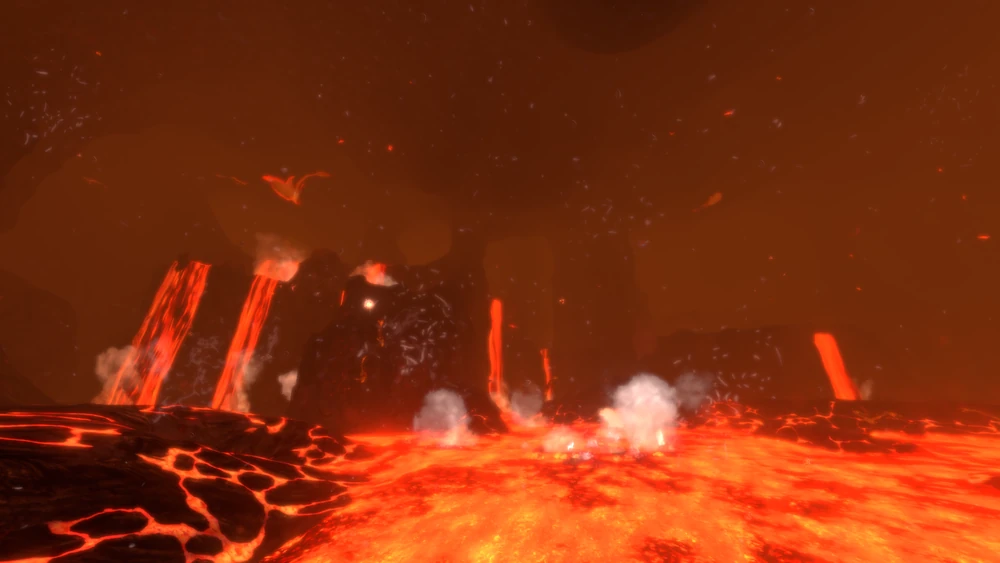
The Lava Lakes are much smaller than the Inactive Lava Zone, but have much more volcanic activity. The chamber consists of a huge lake of lava, with occasional lava falls and masses of magma. Lava falls are a common sight in this biome, along with obsidian pillars and magma formations jutting from the walls and lakes. Compared to the Inactive Lava Zone, the Lava Lakes have higher visibility and a brighter, orange fog due to the greater intensity in lava activity and abundance.
The Lava Falls can be found by descending from the Inactive Lava Zone above to the main chamber below. 2 large pits/openings act as entrances to the Lava Lakes, and one can be found south-east from the Lava Castle. The other entrance is located roughly south-west of the lava castle, which can be found in a domed depression in the Inactive Lava Zone, named the Lava Pit.
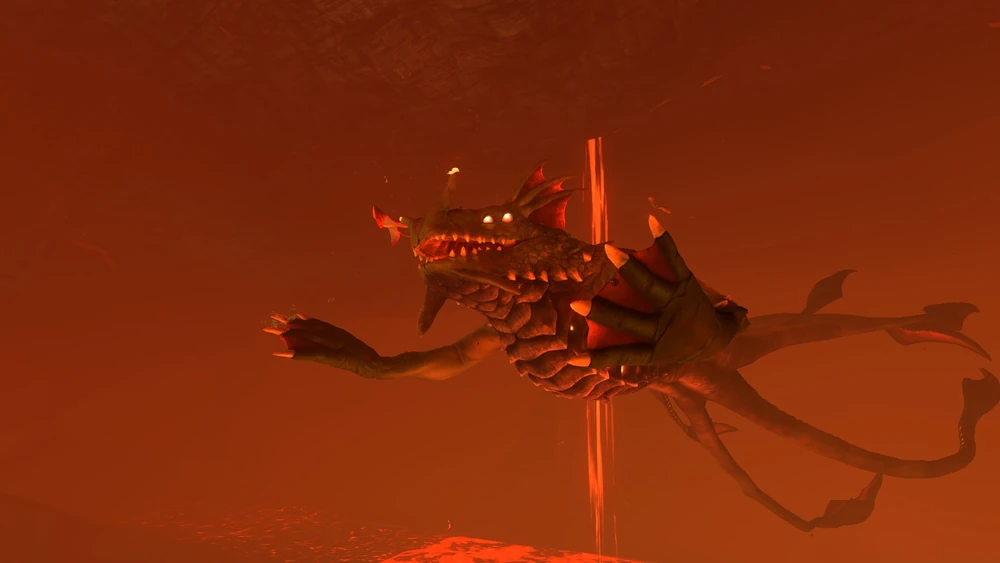
Typically, a Sea Dragon Leviathan can be found guarding the lava lake. Towards the end of the lake, five Sonic Deterrents can be found attached to obsidian mounds by cables. The purpose of these cubes is to ward off fauna from the nearby alien base, the Primary Containment Facility.