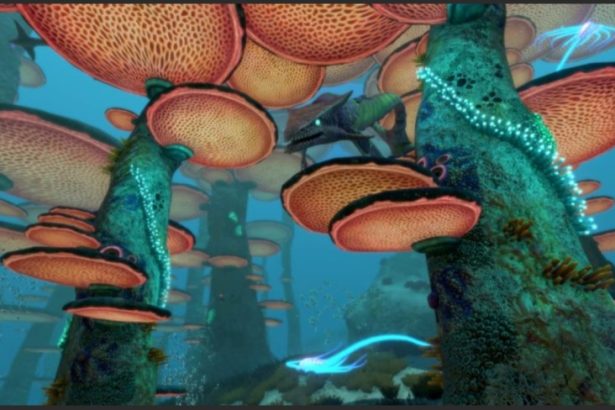
Fauna are the animals of Planet 4546B. Fauna in Subnautica can be found all over the planet, from the mysterious depths of the Crystal Caves to the vibrant Safe Shallows, and the fiery pits of the Lava Lakes.
Fauna on Planet 4546B comes in all shapes, sizes, and forms, ranging from the tiny, cave-dwelling Rockgrub, to the massive Ventgarden and Sea Dragon leviathans. Certain species of small fauna can sometimes be encountered in the form of mostly non-interactive shoals. Nearly all fauna on 4546B has yellow blood.
The player can scan Fauna with the Handheld Scanner, the same as they would with Flora and objects, allowing them to view information about creatures in their PDA.
In Subnautica, performing another scan after unlocking the Data Bank entry for that particular species of Fauna will inform the player as to whether or not the specimen is infected with Kharaa. This is not a feature in Subnautica: Below Zero.
Approximately 1,000 years before the events of Subnautica, the Kharaa Bacterium was released by the Architects, creating a mass extinction event that resulted in the extinction of many species.
Herbivores
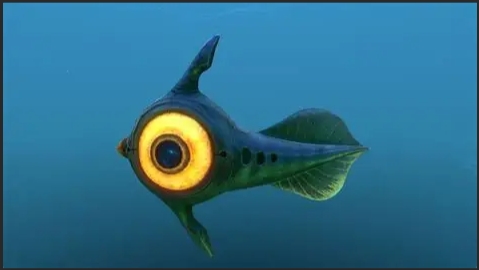
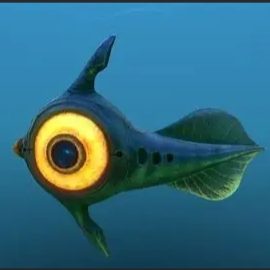
A fast prey fish encountered in shallow waters and rich in protein.
The Peeper is a small, passive herbivore and it is easily identified by it’s large eyes. Their eyes feature black pupils that have bioluminescent yellow sclerae and brown irises. It has a small, pointed caudal fin. They use them to swim away from nearby predators such as Stalkers, Sand Sharks and even the player. It is a great edible food source once it is cooked in the fabricator.
They are normally found throughout most biomes in the world from the shores, kelp forests to the tree mushroom forests, and etc. along with many herbivores.
Behaviour – Passive, Active throughout the day, Runs away from predators
Uses – Used as food by eating it raw or cooking in the fabricator
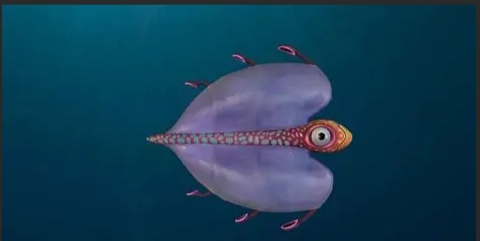
The Bladderfish is a small, passive herbivore found in most surface biomes.
It is primarily used to craft filtered water by crafting in the Fabricator. It can be consumed from it’s bladders to slightly restore the player’s oxygen but is not a reliable food and oxygen source once it’s cooked.
It is compromised of a long, slender body with large bladders on it’s sides. It’s survivability is not effective against most predators since it cannot swim very fast unlike other herbivores such as Peepers. It is very vulnerable to most predators but it’s purpose is to filter water’s carbon dioxide into oxygen in it’s lungs.
Behaviour – Passive, active throughout the day
Uses – For crafting filtered water, for cooking, for crafting air bladders
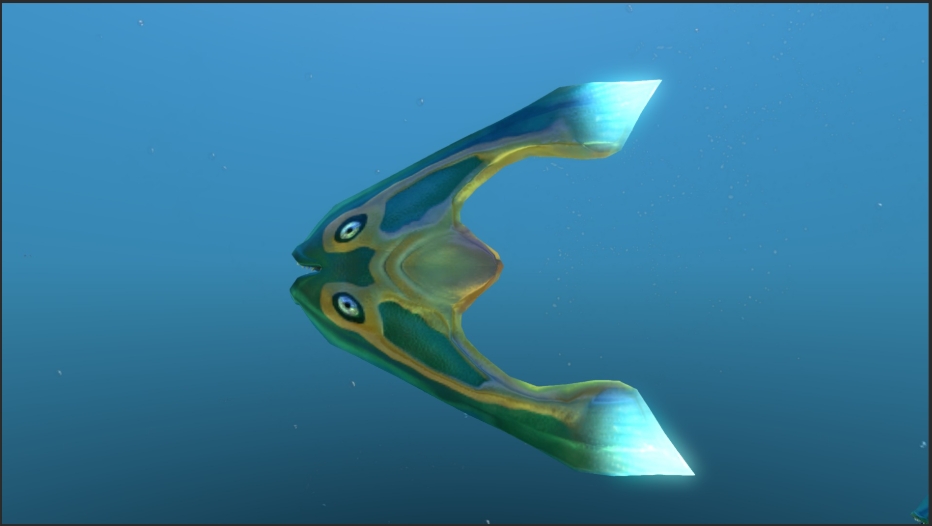
The Boomerang is a small, passive herbivore found in most surface biomes
It is compromised as having two large fins at it’s behind, the cyan glowing bioluminescent tips are used as filter feeders for exhaling carbon dioxide and oxygen. It’s mouth is serrated to cut and chew through coral. It has four eyes, two on each side of its head.
A fairly used food source when it’s cooked in the fabricator.
Behaviour – Passive, Active throughout the night, runs away from predators
Uses – Used as a food source either raw or cooked
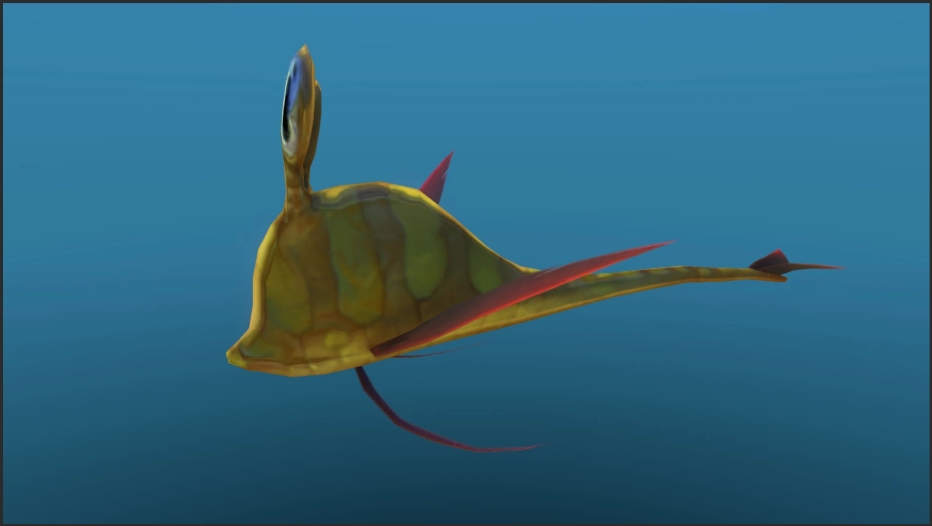
The Garryfish is a small, passive herbivore usually found in the safe shallows and the underwater islands.
It has a long, slim, yellow body with bright vertical orange stripes. The eye stalks are mainly used to spot predators from far away. The large fins give the garryfish moderate speed compared to the fast peeper.
Interestingly the garryfish is only commonly found active at night searching for food than in daytime.
Behaviour – Passive, Active throughout the night, runs away from predators
Uses – Used as a food source either raw or cooked
Rabbit Ray
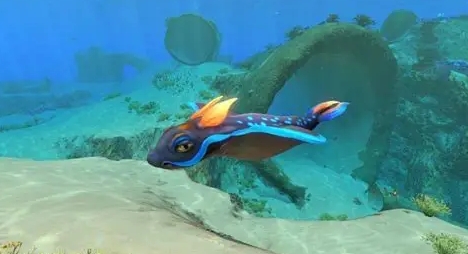
A passive organism found in the Safe Shallows and Kelp Forests of 4546B, these creatures have the incredible ability to swim away from predators faster than the average herbivore.
They have distinct long, orange ears that could detect vibration of predators, it’s ray-like movement thanks to it’s wings and the tail flipper helps boost the creature’s speed and momentum.
It is designated as a ray species related to the many of the ray species found throughout 4546B.
Behaviour – Passive, runs away from predators
Uses – Has no known uses
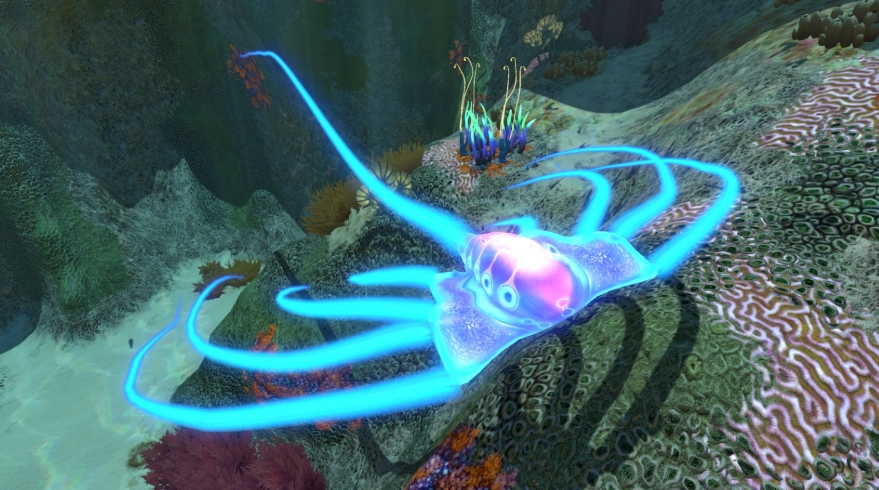
Jellyray
Found in the Tree Mushroom Biome and the Grand Reef Zone, these rays are noticed distinctively through their blue, luminescent colour.
They have known to have eight fins that propel themselves away from predators, they usually appear in deeper waters which explains their purpose of having a luminescent body.
This type of ray species cannot be eaten since the flesh is inedible, probably poisonous to most organisms including some predators.
Behavior – Passive, Runs away from the player
Uses – Has no known uses
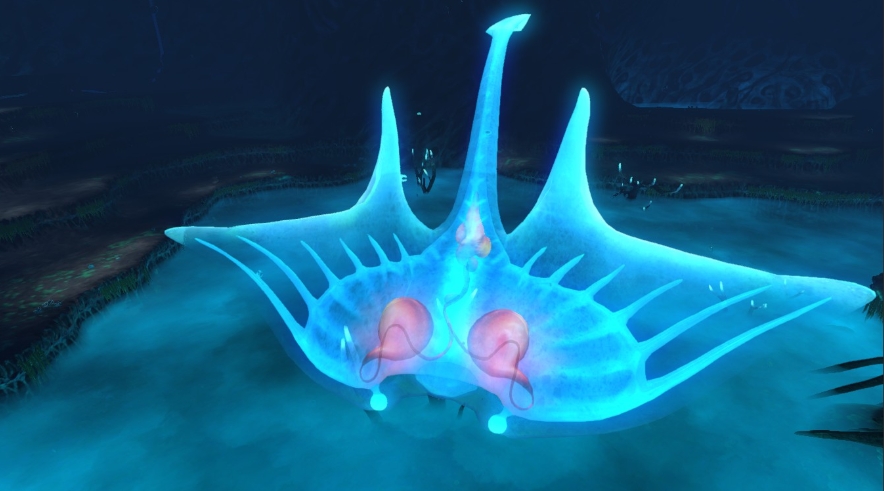
Ghostray
These large terrestial organisms found in the Lost River Biome, are seen gliding through the caverns with their bioluminescent blue body related to the Jellyrays.
Unlike their counterparts, their organs can be seen through their transperent bodies. Their lungs could indicate that they use it for respriation for oxygen in deeper waters.
Behaviour – Passive, Runs away from predators
Uses – Has no known uses
Carnivores
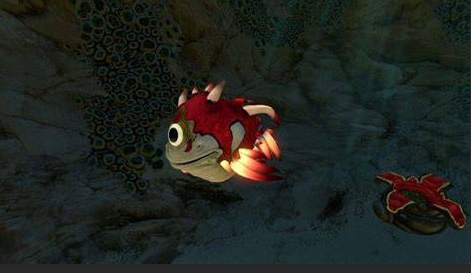
Crashfish
A small carnivore found in the Safe Shallow caverns in 4546B, they are hostile creatures that hide in Sulfur plants and ambush prey by exploding themselves.
Their unique hunting strategy is barbaric and strange, as exploding themselves results them getting killed afterwards. They have a symbotic relationship with the sulfur plants as the crashfish filters nutrients to the plant.
Behaviour – Hostile, swims at the player to explode
Strategy – Swim away using the seaglide, attack them with the survival knife, use the propulsion cannon to fire them away
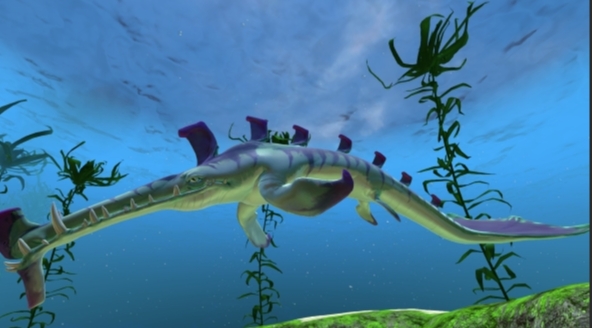
Stalker
These long-bodied reptilian carnivores are found all over the Kelp Forests in 4546B, they attack any nearby prey such as small fish and the player.
Their unusual hoarding behaviour of collecting metal scraps indicates that they shed their teeth that falls off overtime leaving Stalker teeth to be gathered by the player as a crafting recipe for enameled glass.
Behaviour – Hostile, Eats nearby small fish, collects nearby metal objects to their nests
Strategy – Swim away using the seaglide, bait them by holding fish, metal objects or flares.
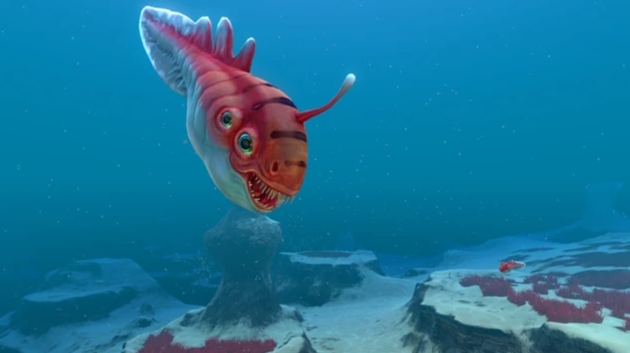
Biter
These small carnivorous creatures are found in packs wandering in the Grassy Plateaus in 4546B, they hunt prey anything small to bigger than their size.
They hunt carelessly thanks to their razor sharp teeth that grinds through flesh, their intelligence is about 80% lower than their muscle tissue which means they can attack any prey despite their small size.
Although not threatening as singular, they can be devestating in groups of them.
Behaviour – Hostile, hunts prey larger than themselves
Strategy – Swim away, attack with survival knife or the propulsion cannon
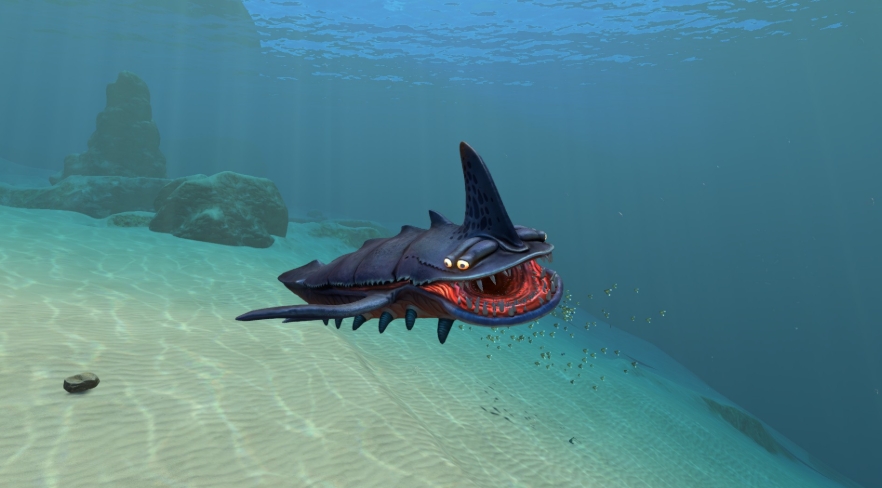
Sand Shark
A large, bulky carnivore found in the Grassy Plateaus in 4546B, they relentlessly attack their prey by hiding in sand to ambush their prey out of nowhere.
Their behavior of ambushing prey by hiding in sand is very similar to stonefish in planet earth, they are fast and agile which makes them a formidible creature to face.
Behaviour – Hostile, hides in sand to ambush prey
Strategy – Swim away using the seaglide, distract them with flares
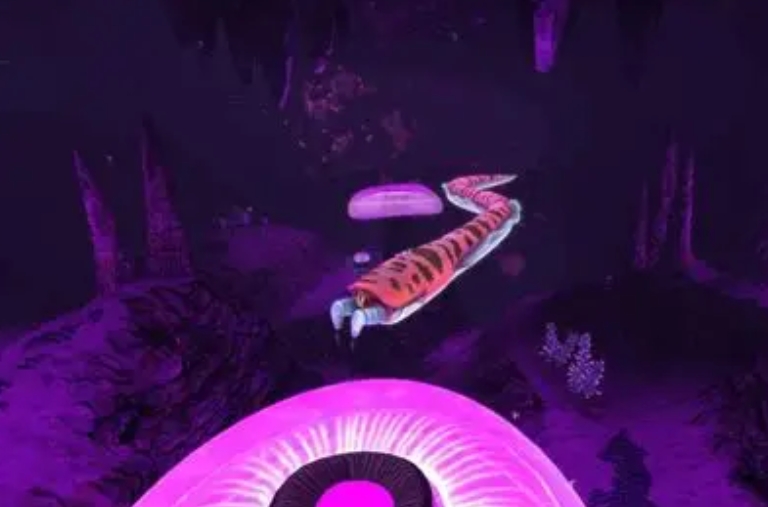
Crabsnake
Crabsnakes are fierce, deadly predators that dwell in the Jellyshroom Caves beneath the shallows of the ocean.
They are long, slender bodies with massive fangs that tear through prey; avoid large jellyshrooms that may contain a crabsnake that hides in them to ambush prey from their line of sight.
Behaviour: Hostile, can ambush prey from giant jellyshrooms
Strategy: Avoid them at all costs
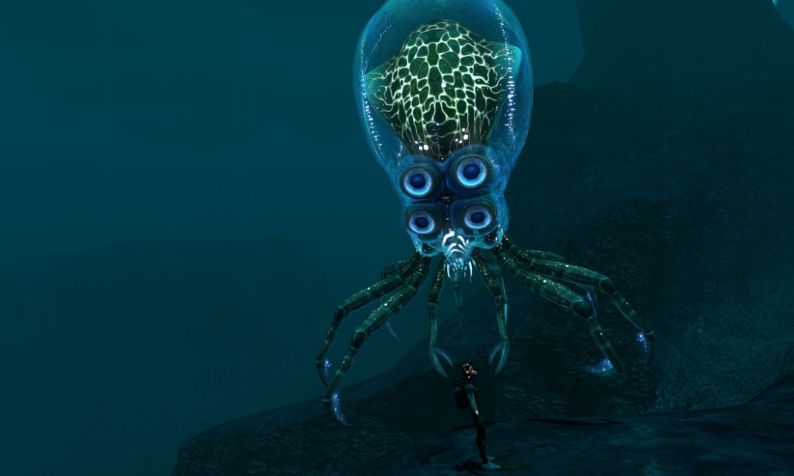
Crabsquid
Crabsquid are large predators that resemble a squid-like body structure with a massive, translucent brain and four luminiscent eyes.
Their ability to use electric magnetic field to defend themselves is able to power down tools and vehicles makes them one of the most deadly by far. They are located around the grand reef, blood kelp forest and lost river.
Behaviour: Hostile, can produce an electric shockwave that disables tools and vehicles, is attracted by light sources
Strategies: Avoid or distract with light sources
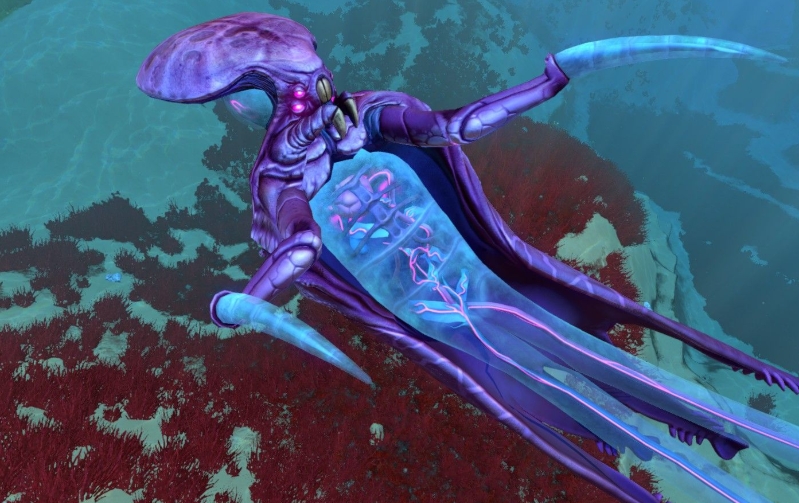
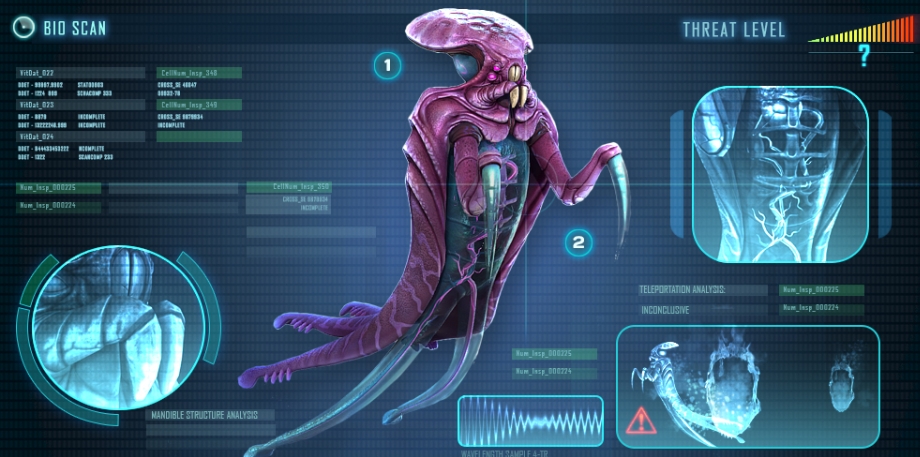
Warper
Warpers are by far one of the most deadly creatures in 4546B, they have massive tentacles, transparent body and is able to glide to nearby prey, can attack with their large claws and their extraordinary ability to warp itself or other lifeforms to their will.
Warpers are not living lifeforms, they are bio organic machines created by the precursors who lived before the arrival of the Aurora. Their primary goal is to kill any infected lifeforms that inhabit the planet including the player.
Behaviour: Hostile to infected lifeforms, Active during the Day and Night, Can warp itself or other lifeforms
Strategy: Avoid
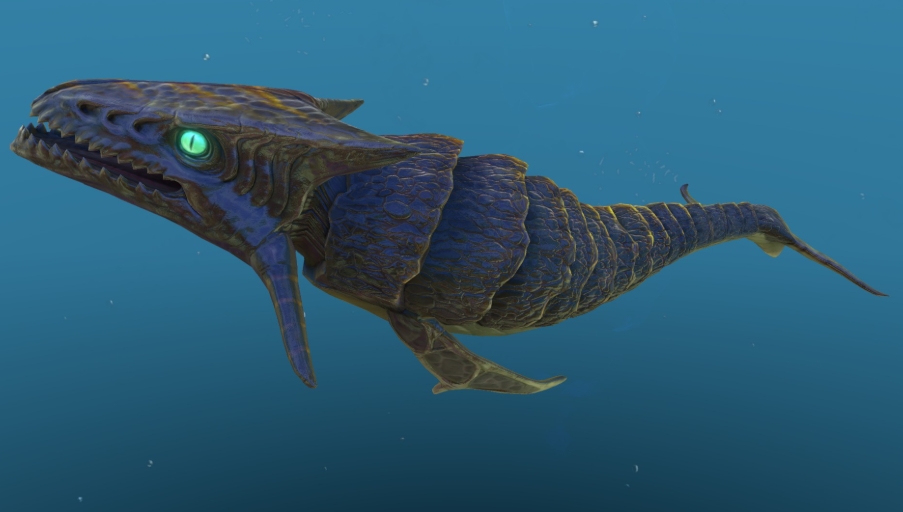
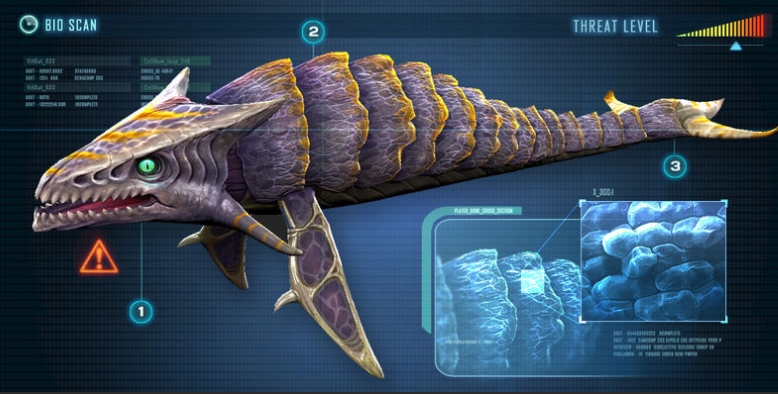
Boneshark
Bonesharks are large predatory lifeforms that inhabit the underwater islands and the crag fields of 4546B. They have distinct armoured plates all over their entire body that protects them from physical threats such as bites and slashes.
They attack any prey nearby that approaches their territory, they are also attracted to light sources signifiying that they may hunt other luminescent prey such as the jellyrays, etc.
Behaviour: Hostile, attracted to light sources
Strategy: Avoid or distract with light sources
Lava Lizard
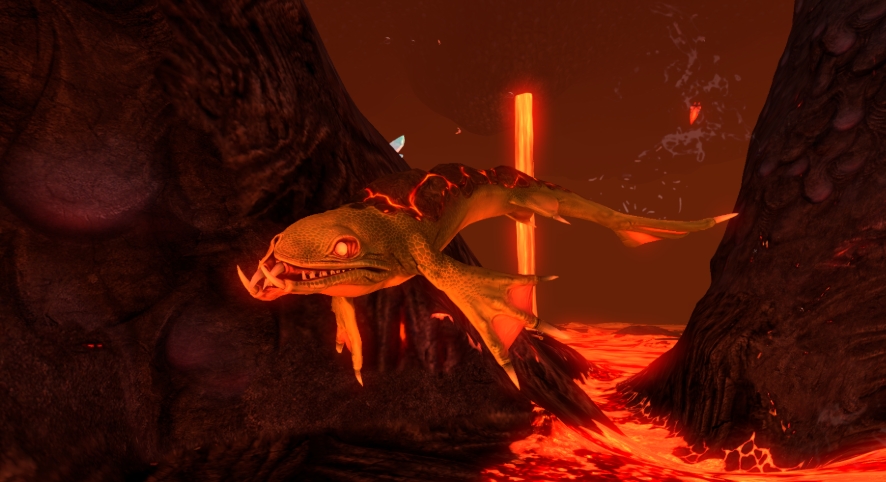
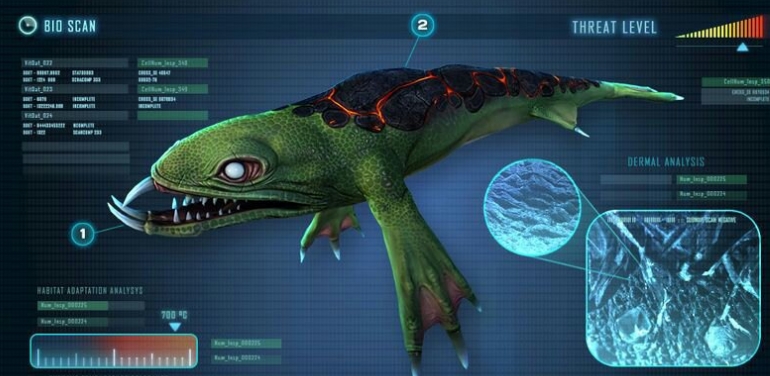
Lava Lizards are large predatory lifeforms found in the Molten Lava Biome, they have green tough scales, their back is covered with magma that is attached to their scales for protection.
Their hunting ability is spitting lava rocks at other prey, which makes them unusually dangerous than other lifeforms in their region.
Behaviour: Hostile, spews molten rocks
Strategy: Avoid
River Prowler
River Prowlers are large, predatory lifeforms inhabiting the Lost River biome.
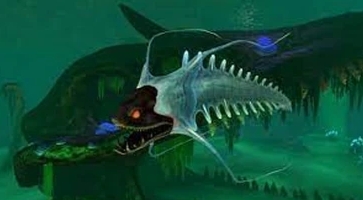
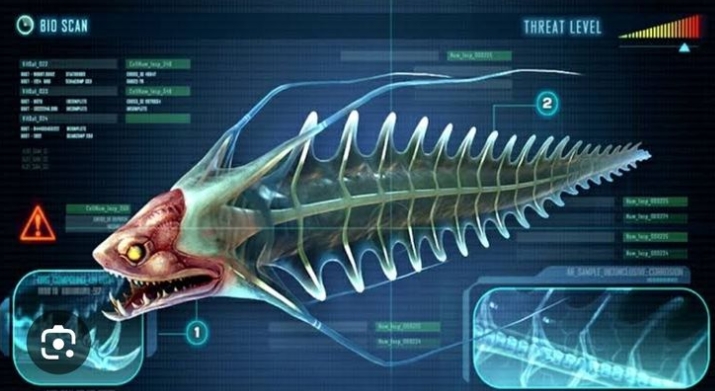
They are extremely aggressive due to their predatory lifestyle, their body parts consists of a large, red head with a massive jaws with spiked teeth, their bioluminescent spines that glow in the dark and large antennae around their skull.
Their body structure is similar to that of Ampeels, so it may be speculated that they are close relatives to each other by relating to the abundance of ray species of 4546B.
Behaviour: Hostile, Active during the night
Strategy: Avoid
Leviathans
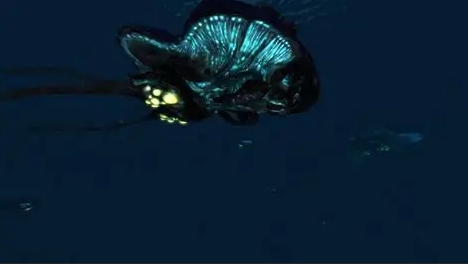
Reefback Leviathan
The Reefbacks are the largest underwater herbivores found in 4546B to this date.
They are classed as Leviathan for their humongous size and weight. They are seen gliding through many biomes, they swim in groups.
The juvenile stage, the newborns are much smaller than their parent but as they get older their size increases and they grow various flora that attaches to their backs, creating a symbolising ecosystem between flora and fauna. Despite them being gigantic and intimidating, they are peaceful creatures.
As big as they are, they have no known natural predators, only a leviathan the size of a reefback is able to kill them but such giant leviathans have gone extinct.
Behaviour: Passive, be careful of tiger plants that grow along with other flora on their back
Strategy: Reefbacks grow barnacles that may contain copper and silver outcrops
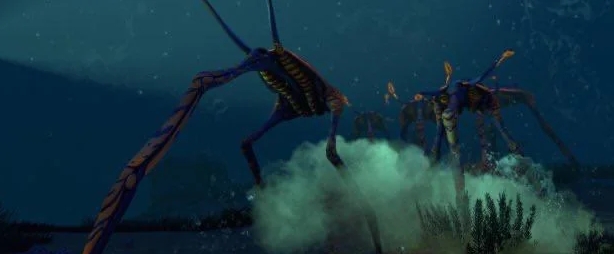
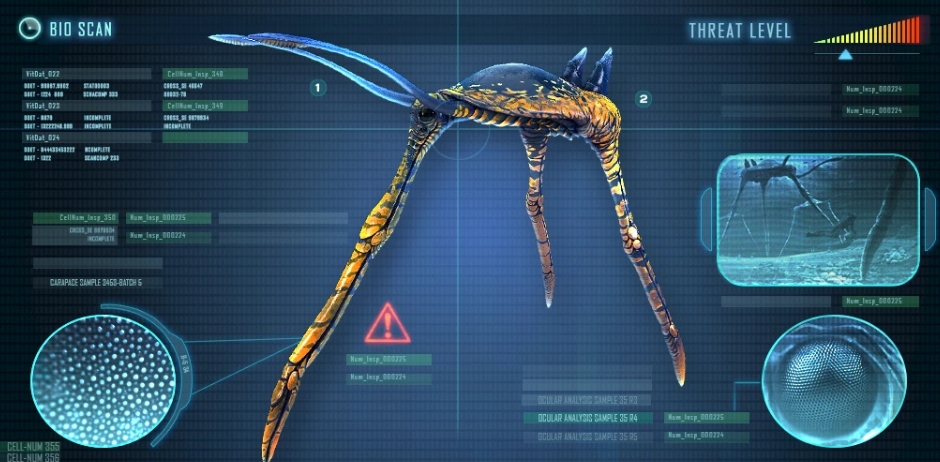
Sea Treader Leviathan
Sea Treaders are large, tall herbivores that tread across the sea floor in the Grand Reef and the Sea Treader’s Path forming in small herds. These giant creatures are the smallest type of leviathan ever recorded in 4546B.
Their body parts consists of a large antennae that is able to detect around their surroundings and two small fins at their behind meant to keep balance against the strong wind and pressure of their environment. Their three legs are their main source of movement as they cannot swim like many other lifeforms.
They have three different sizes: small, medium and large. They are known to walk across the seabed but beware of being in their way as they may knock over vehicles and possibly even crush the player.
Their known ability to excavate sandstone and shale outcrops makes them very handy for players to farm.
Behaviour: Passive, grazes along with herds
Assesment: They reveal sandstone and shale outcrops as they graze the seabed; useful for collecting resources
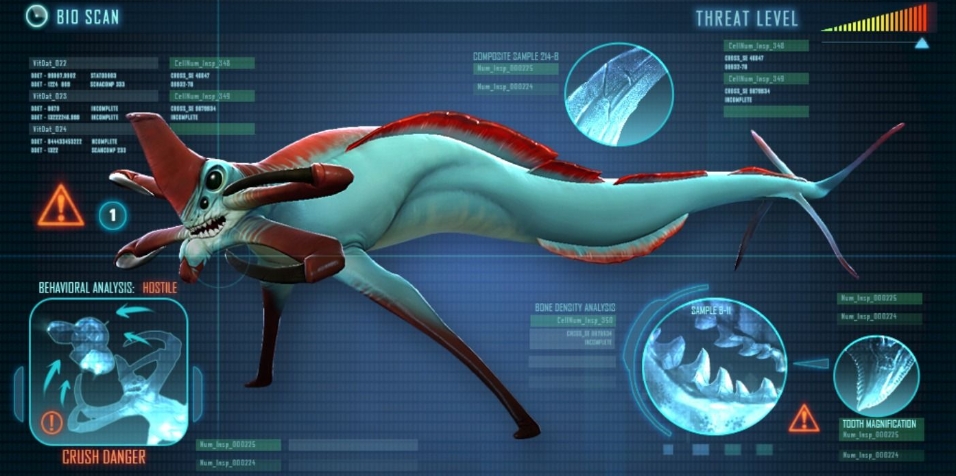
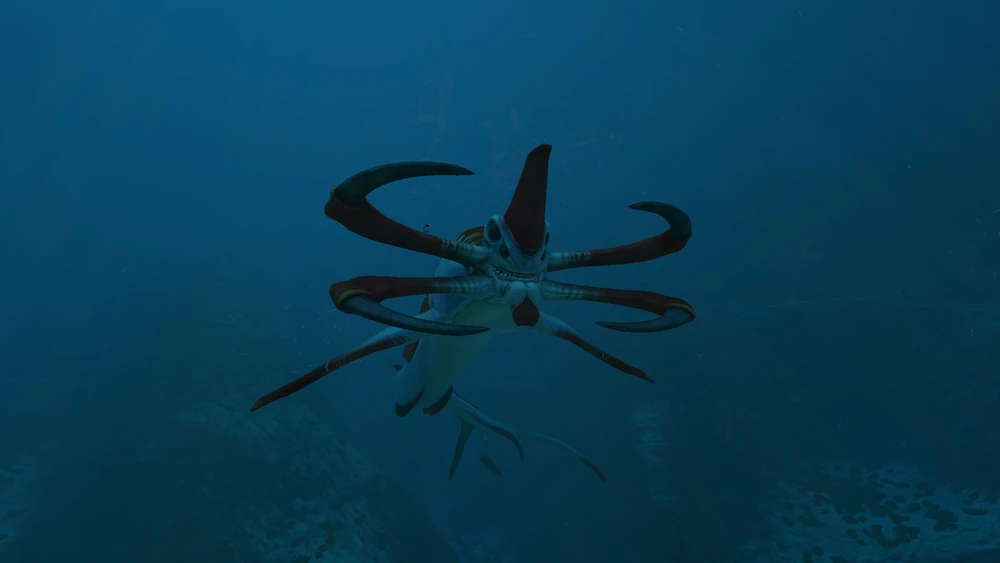
Reaper Leviathan
Description
The Reaper Leviathan is an aggressive leviathan class fauna species usually found swimming in large open areas, such as the Crash Zone, Dunes, and Mountains. One can be found lurking around the base of the mountains island. It is the third-largest aggressive creature in the game and fifth largest overall.
Reaper Leviathans are the most populous species of leviathan, with a total of twenty-five roaming The Crater: nine in the Crash Zone, eight in the Dunes, seven in the Mountains, and a lone one on the edge of the Bulb Zone.
Abilities
The Reaper Leviathan is capable of taking away 80% of the player’s health if they are attacked outside their vehicle. Wearing a Reinforced Dive Suit will reduce damage taken by half, taking 40% damage instead of 80%.
If the next attack kills the player, it will hold its victim in its mandibles, pause for a second while roaring, and then proceed to pull the player into its mouth, killing them.
It is also capable of grabbing the Seamoth and shaking it around. Doing so will deal about 40 – 60% damage over eight to thirteen seconds until it lets the vehicle go. However, if hit with the seamoth’s Defense System, it will let go instantly. The Reaper Leviathan will also grab the Prawn Suit. If it succeeds, the damage incurred will only be around 20-30%.
Even in Creative Mode, Reaper Leviathans will still jumpscare and grab Seamoths and Prawn Suits.
The Reaper Leviathan has also been observed to grab a Seamoth or Prawn Suit and smash it down to the seabed, destroying it completely afterward.
Ghost Leviathan
Description
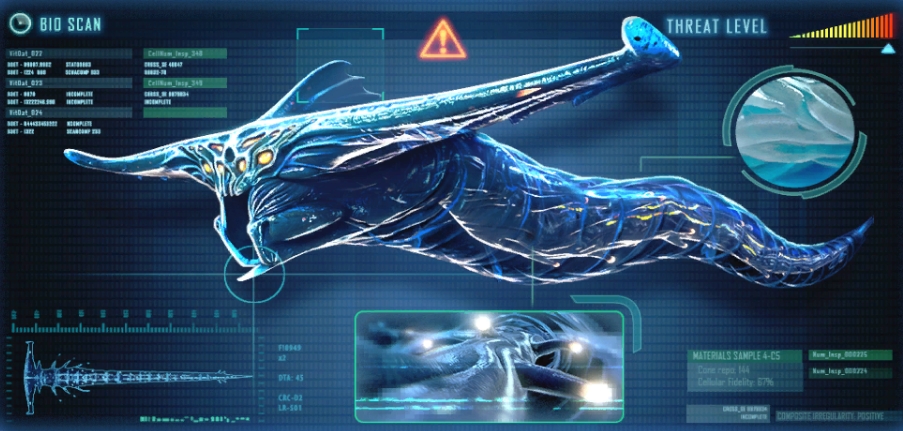
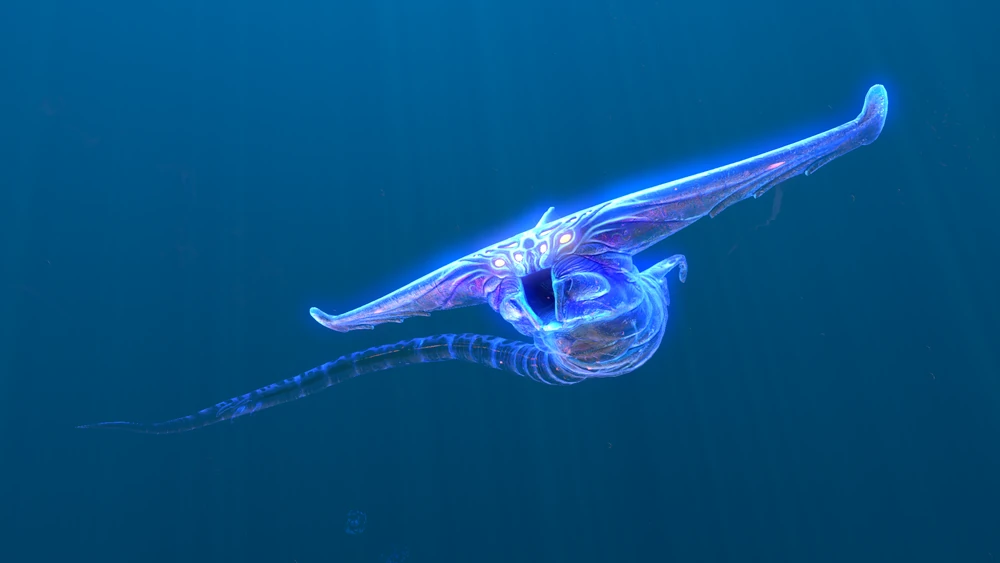
The Ghost Leviathan is a leviathan classfauna species and adult form of the Ghost Leviathan Juveniles. It is the second largest aggressive creature of Subnautica (the largest being the Sea Dragon Leviathan and the third being the Ghost Leviathan Juvenile).
Three adult Ghost Leviathans spawn on the map (not counting the infinite number found in the Crater Edge): two in the Grand Reef, and one in the Northern Blood Kelp Zone.
If the player enters the Crater Edge, a single adult Ghost Leviathan spawns in. If the player stays in the Crater Edge for 40 seconds, a second Ghost Leviathan will spawn. If the player stays in the area for another 40 seconds, a third and final Ghost Leviathan spawns in.
When/If the player kills them, they will respawn. They will all pursue the player until the player returns to the playable area, upon which they will all retreat.
Life Cycle
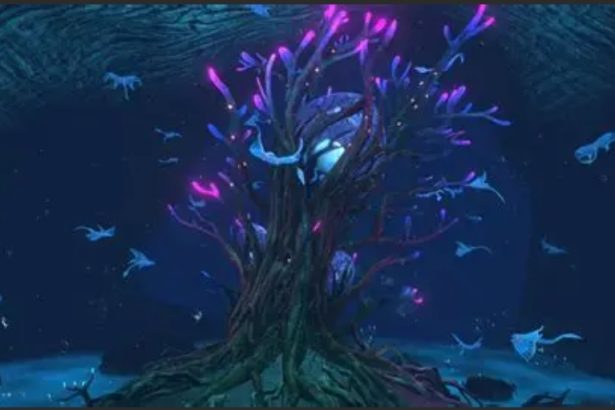
The Giant Cove Tree is the nesting ground of this leviathan species (Although they are not present around the tree), with its massive glowing bulbs being their eggs which are blue and purple.
According to PDA scan entries of the Cove Tree, the eggs were laid there when the tree was small, and the branches have grown around the eggs to protect them until conditions are right to hatch.
The Ghost Leviathans’ life cycle begins in the Lost River as juveniles, they consume the Ghostrays and River Prowlers and potentially other juveniles.
As the leviathans mature and become too large for their home, they migrate to the open, surface world biomes such as the Grand Reef and Blood Kelp Zone, consuming Ampeels and Crabsquids in the Northern Blood Kelp, and shoals of fish and possibly even Sea Treader Leviathans in the Grand Reef, until eventually migrating to the Crater Edge, roaming freely in the open water and constantly growing larger until they die.[1]
[2] Despite being much smaller than the Sea Emperor Leviathan, the Ghost Leviathan’s eggs can be far larger, capable of growing to sizes far too large for the creature to lay, suggesting that the eggs can grow drastically after being laid.
Sea Dragon Leviathan
Description
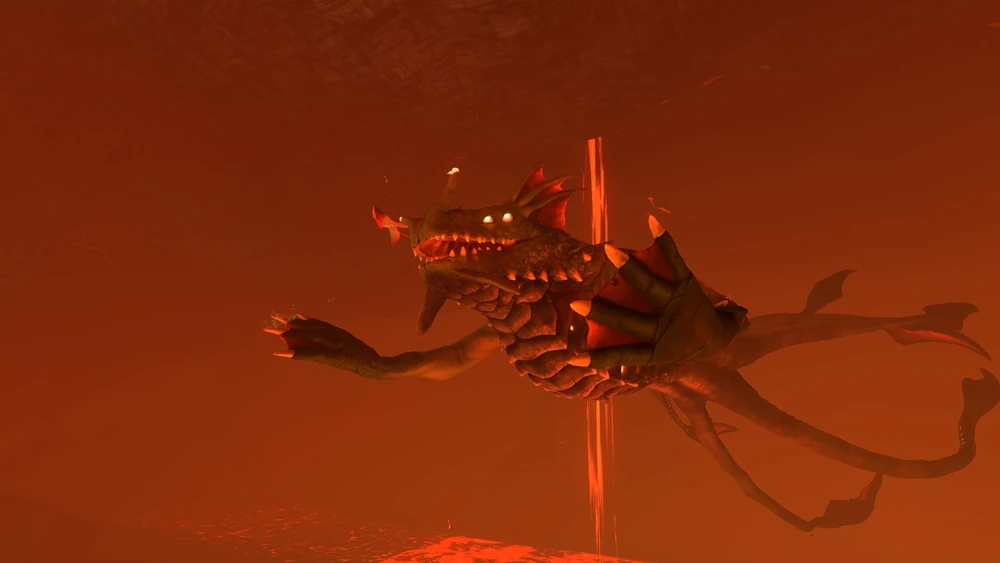
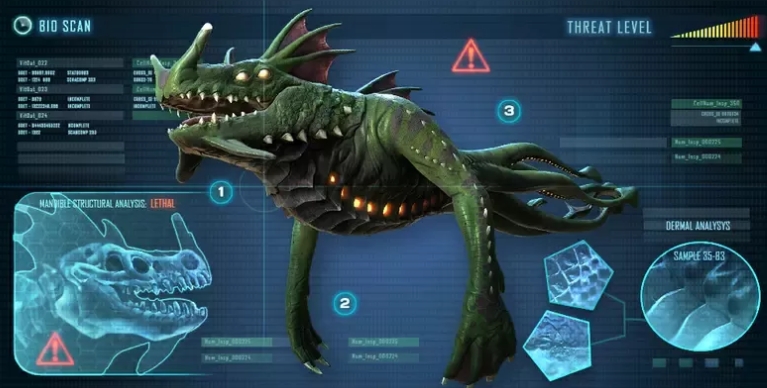

The Sea Dragon Leviathan is a colossal leviathan class fauna species. It is the largest aggressive creature of Subnautica. There are a total of three Sea Dragon Leviathans on the map: two in the Inactive Lava Zone and one in the Lava Lakes.[1]
Abilities
The Sea Dragon Leviathan uses its arms and tentacles to swim in the water at great speed; according to the “Damaged Anchor Cable” entry from the Disease Research Facility, it is capable of exerting over 300 tons (600,000 pounds) of force by ramming.
Just being in close proximity to the Sea Dragon will cause the player or Prawn Suit to be jostled due to the water it displaces.
It will attack the player with its arms if they are on either side of its front body by swatting them away and dealing 40 damage to the player. If the Sea Dragon attacks the player with its mouth, it will swallow the player, killing them instantly even if the player has the Reinforced Dive Suit equipped.
Occasionally, the Sea Dragon will open its mouth wide and fire a molten rock at its target as a projectile attack. The Sea Dragon is also capable of firing a barrage of small “fireballs” covering a wide area.
Sea Emperor Leviathan
Description

The Sea Emperor Leviathan is the largest known living Leviathan class fauna found within the crater in Subnautica. It is sapient and telepathic, but unlike most Leviathans, it is not aggressive.
Story
The captive Sea Emperor Leviathan is the last remaining adult of its species and a parent to at least seven eggs. The five eggs which still remain must be hatched at some point in the story. It is approximately two-thousand six-hundred years old, having massively surpassed its species natural lifespan.
It is possible that the Aquarium has some form of life support system in place that allowed it to live to such an advanced age, as it was noted that one-thousand six-hundred was already old.
Almost all of the Sea Emperor Leviathans died when the Kharaa Bacterium was released as it killed off their food source, leaving only the one captive adult and the eggs it was discovered with. As the only source of Enzyme 42 on Planet 4546B, it and its children are the keys to cure the Kharaa Bacterium.
The Precursors studied the last surviving Sea Emperor Leviathan in hopes of finding a cure using its natural production of Enzyme 42. However, due to its weakness, possibly due to old age or illness, studies conducted showed that it was not a viable source of Enzyme 42 as the enzymes it produced was too unstable and only reverted symptoms temporarily.
After the Precursors could not find a way to hatch its eggs naturally, they took three into the dissection room of the Primary Containment Facility and experimented on them, cutting all of them open and removing the fetus from one of the eggs. One other egg was taken to the egg lab, where it was also tested on. Still, they could find no way to cause the hatching process to trigger naturally, and juveniles born outside of the natural conditions could not produce suitable enzymes.
They resorted to attaching the eggs to an Incubator Device to keep the eggs alive while they worked on more ways to hatch them. Shortly after this, the Disease Research Facility was destroyed, releasing the Kharaa Bacterium, causing all Arches to the facility to be closed and initiating the planetary quarantine.
At an unspecified time, it managed to train Peepers to use the Alien Vents to distribute Enzyme 42 to the surface. Under its control, Peepers traveled through the Alien Vents, bringing flora seeds to the aquarium, and leaving with small amounts of Enzyme 42 which they distribute at the surface. This system allowed a small amount of life to survive on the planet.
After its eggs are hatched, it will play with its children and then direct them to the Arch leading just outside the Quarantine Enforcement Platform which they will leave through. It will begin dying shortly afterward, as it has used the last of its strength to play with its offspring.[1]
The closest translation of the alien symbol for this specimen is ‘sea emperor’. Bone samples from deceased leviathan specimens indicate some potential for Kharaa immunity. Single specimen captured for study at purpose-built emperor containment facility, constructed in volcanic region at depth 1200m.
― PDA, Data Downloads